
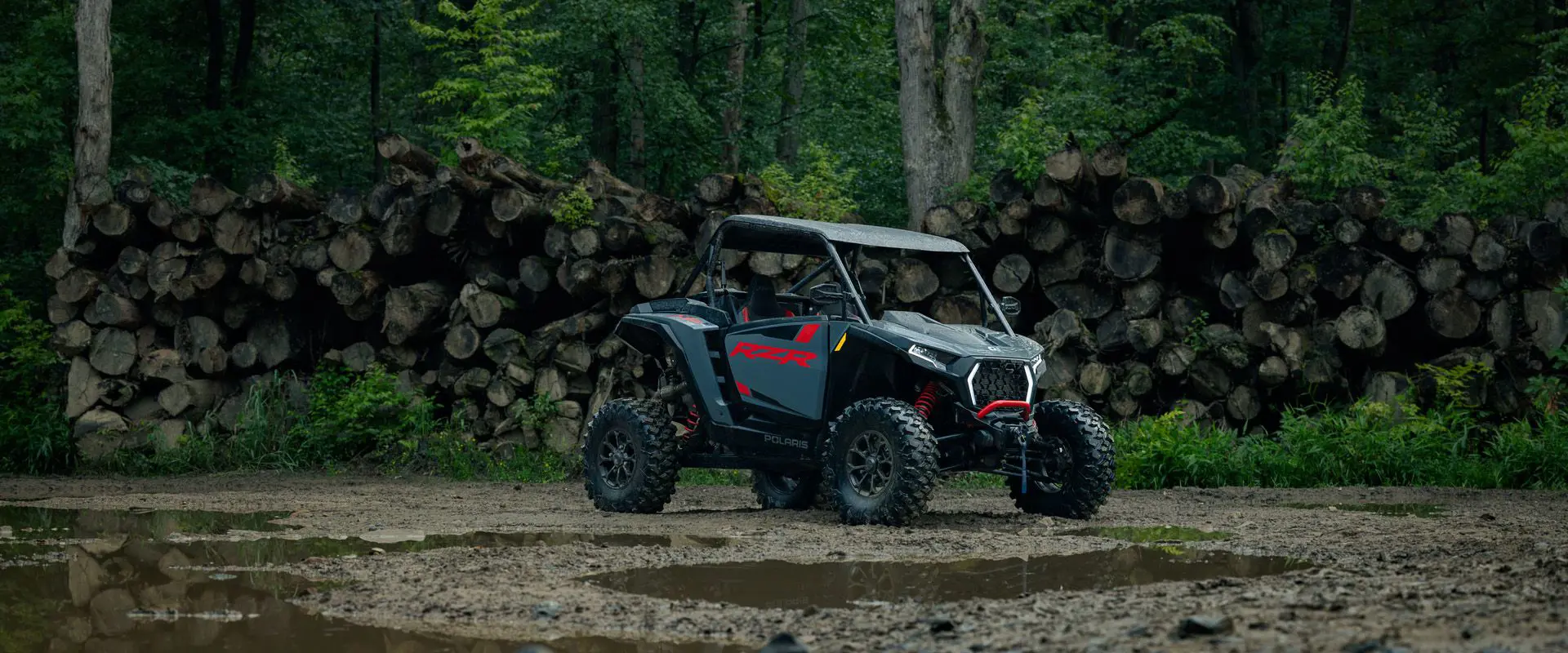
2026 Polaris RZR Trail Ultimate Review: Its Narrow Stance Is Both Its Strength and Weakness
The feature that makes the 2026 Polaris RZR Trail Ultimate so capable on tight wooded trails is also what made it feel the least reassuring when speeds increased.
With a 50-inch-wide stance, the RZR Trail can fit through narrow spaces that stop many larger side-by-sides. It felt agile, powerful and genuinely entertaining during our trail test. However, that narrow design also made it feel uneasy in faster corners, where the machine sometimes gave us the impression that it could roll more easily than expected.
The RZR Trail Ultimate is enjoyable when used for its intended purpose, but buyers need to understand the tradeoffs that come with its compact design.
Enough Power to Keep the Trail Interesting
The RZR Trail Ultimate uses an 875cc, twin-cylinder engine producing 75 horsepower. Although that figure is modest compared with the triple-digit horsepower found in Polaris’s larger performance models, the Trail does not feel slow.
Its relatively compact size and responsive power delivery help it accelerate with authority. On tighter sections of trail, it felt quick and strong without becoming difficult to control. Pressing the accelerator produced enough immediate response to make the machine entertaining, especially when exiting slower corners or climbing inclines.
The power felt well matched to the Trail platform. It was not overwhelming, but it was strong enough that we never felt the machine needed a larger engine for normal recreational trail riding.
Eastern Bluegrass Reviews Power Rating: 7/10
It felt good and surprisingly powerful for one of Polaris’s more accessible trail platforms. Riders seeking extreme acceleration may want a larger RZR, but the Trail delivers enough performance for the environment it was built to handle.
Suspension Gets the Job Done
The Ultimate trim comes equipped with FOX 2.0 Podium X shocks and 10 inches of suspension travel at both ends. It also provides 11 inches of ground clearance and rides on 26-inch tires.
The suspension was acceptable for a narrow trail machine, particularly when traveling at moderate speeds. It handled ordinary bumps, ruts and uneven sections without making the ride excessively harsh.
However, it could have been better.
When the trail became rougher or speeds increased, the suspension did not feel as controlled or confidence-inspiring as we would have liked. Larger bumps were more noticeable, and the overall ride lacked some of the composure found in wider, more suspension-focused machines.
That does not make the suspension bad. The RZR Trail occupies a more accessible position in the Polaris performance lineup, and its suspension performed reasonably well for its intended use. Buyers simply should not expect it to ride like a wider and more expensive long-travel model.
Eastern Bluegrass Reviews Suspension Rating: 6/10
It is capable enough for recreational trail riding, but faster or more aggressive riders may reach its limitations relatively quickly.
Excellent Agility on Narrow Trails
The 50-inch stance is where the RZR Trail earns its name.
It could move through narrow paths, between trees and around tight turns without feeling bulky. The compact 79-inch wheelbase also helped it change direction quickly. Electronic power steering kept steering effort manageable and made the machine easy to place on the trail.
This is where the Trail has a genuine advantage over larger side-by-sides. Many modern sport machines have grown wider, heavier and more difficult to use on restricted trails. The RZR Trail remains narrow enough for many 50-inch routes while still providing two seats, all-wheel drive and meaningful performance.
For riders whose local trail system has width restrictions, that compact design may matter more than horsepower or suspension travel.
The High-Speed Stability Tradeoff
The RZR Trail’s narrow stance creates an unavoidable compromise.
At lower and moderate trail speeds, the machine felt agile and responsive. During faster corners, however, it began to feel uneasy. There were times when the amount of body movement and the narrow stance made it seem as though the machine could roll more easily than we expected.
That was a feeling from our test rather than a claim that the vehicle has a safety defect. Any side-by-side can roll when driven too quickly for the corner, terrain or conditions. However, we noticed the sensation more in this narrow machine than we have in wider side-by-sides.
The same 50-inch width that helps the RZR fit through tight trails gives it less lateral stability than a wider model. Drivers should slow down before corners, avoid sudden steering inputs and operate the machine at a speed appropriate for the terrain.
Seat belts and helmets should always be used, and riders should never treat the roll cage as a substitute for careful driving.
Ultimate Technology in a Compact Package
Although the RZR Trail is one of the more accessible platforms in the RZR family, the Ultimate is not the base trim.
It includes a seven-inch RIDE COMMAND display with built-in GPS and topographic mapping, Rockford Fosgate Stage 2 audio, a rear camera, LED lighting, electronic power steering and Polaris’s P.A.S.S. anti-theft system.
Those features make the Trail Ultimate much better equipped than a basic recreational side-by-side. The navigation system is particularly useful on unfamiliar trails, while the rear camera helps compensate for limited visibility when backing up.
It also offers a 300-pound cargo-box capacity and a 1,500-pound towing rating, giving it some practical usefulness beyond recreational riding.
Affordability Is Difficult to Justify
The 2026 RZR Trail Ultimate starts at $19,999 before the $1,095 destination charge, dealer fees, taxes and accessories.
That price is difficult to ignore. The technology, premium audio, rear camera and upgraded FOX shocks add value, but buyers are still paying approximately $20,000 for a narrow machine with limited suspension travel compared with larger sport models.
The wider 2026 RZR XP also starts at $19,999, although it cannot match the Trail’s ability to access width-restricted routes. That comparison makes the Trail Ultimate a highly specialized purchase.
If you need a 50-inch side-by-side with built-in navigation and premium features, the price may be easier to justify. If your trails permit wider machines, several alternatives provide greater suspension capability and high-speed stability for similar money.
Eastern Bluegrass Reviews Affordability Rating: 5/10
The Ultimate trim includes useful equipment, but its price places it against larger and more capable machines. Buyers are paying for narrow-trail access and technology rather than maximum performance per dollar.
The Eastern Bluegrass Reviews Verdict
The 2026 Polaris RZR Trail Ultimate delivers exactly what its name promises: an agile side-by-side designed to explore tight trails.
Its 75-horsepower engine felt strong and responsive, while its compact dimensions made navigating wooded routes easy. The suspension performed reasonably well for the class, but it could have provided more control over rough terrain.
Its biggest strength is also its biggest weakness. The 50-inch stance is excellent in narrow spaces, but it made the RZR feel less settled during faster cornering. This is a machine that feels most comfortable on tight, technical trails—not wide-open terrain where higher speeds expose its limitations.
Power Rating: 7/10 Suspension Rating: 6/10 Affordability Rating: 5/10 Eastern Bluegrass Reviews Overall Rating: 6/10
The RZR Trail Ultimate is a good specialized machine for riders who truly need its narrow stance. For everyone else, the price makes a wider and more stable model worth considering.
Would you choose the narrow RZR Trail for its agility, or move to a wider model for greater stability and suspension capability?